
Leadership Development
Great leaders aren't born. They're built, deliberately.
Most organisations invest in individual leaders and hope it spreads. It usually doesn't. Leadership Development works at the level where change holds, across a whole layer of your organisation at once: new leaders finding their feet, senior leaders scaling their impact, or a high-potential cohort you're preparing for what's next. Every program is shaped around your organisation's specific leadership challenges and where your teams are right now.
We combine the latest insights in human psychology with decades of experience in organisational transformation, because great teams aren't accidental: they're designed, and that design work starts with the people leading them.

Leadership doesn't develop in isolation.
A frontline leader finding their feet shapes how their team experiences work every single day. A senior leader scaling their impact shapes the direction of the business. A high-potential cohort being prepared for what's next determines whether the organisation has leaders ready when it needs them, not scrambling to find them.
Leadership Development works across these levels at once, building the same core capabilities everywhere they're needed: psychological safety, straight feedback, and the ability to navigate difficult conversations instead of avoiding them. It also builds the capacity to lead through disruption, including the shifts AI and rapid change are already forcing on how teams work, so leaders aren't just managing what's familiar.
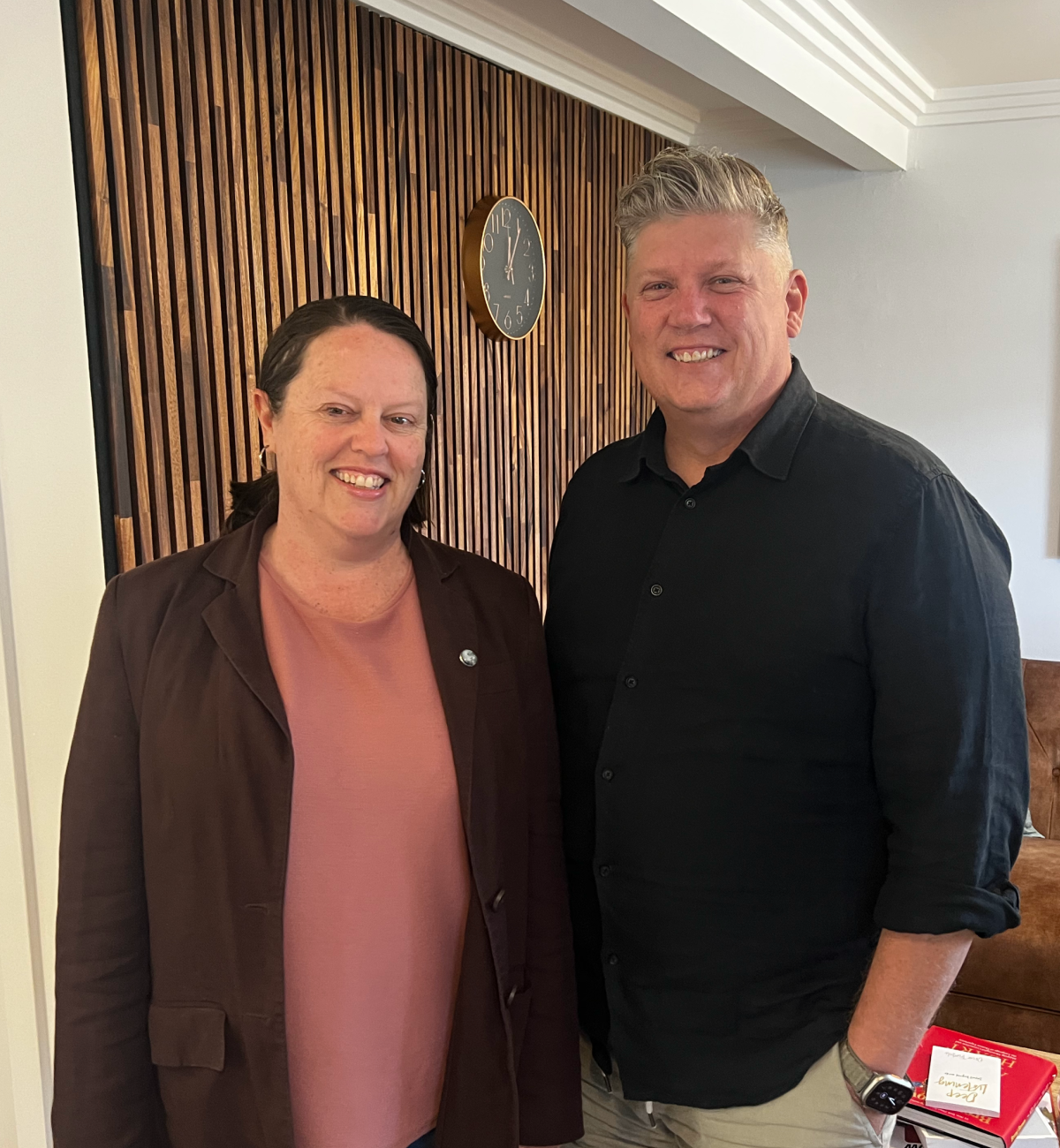
Michelle Crawford & Aaron McEwan
What Changes, Level by Level.
Leadership Development doesn't stop at a single program or a single tier. Here's what it builds, and where you'll see it show up.
Capability built where you are. Leadership capability built at the level your people sit right now, whether that's someone stepping into their first team lead role or a senior leader shaping strategy.
Real scenarios, not theory. Practical skills in feedback, difficult conversations, and psychological safety, built through situations your leaders actually face.
Succession, sorted early. Succession-ready programs for your high-potential cohort, so the next layer of leaders is ready before you need them, not scrambled together after someone leaves.
Leading through disruption. Including how AI and rapid change are reshaping what it takes to lead a team well.
Built around your organisation. Every program shaped around your organisation's specific leadership challenges, backed by people who combine psychological insight with real organisational transformation experience.
Planning to invest in your leaders? Book a conversation with Michelle or Aaron and talk through the leadership challenges your organisation is facing right now.
FAQs: Leadership Development
Who is Leadership Development for?
Anyone stepping into a leadership role for the first time, senior leaders looking to scale their impact, or a high-potential cohort you're preparing for what's next. It's built to work across these levels at once rather than treating them as separate problems.
How is this different from generic leadership training?
It isn't delivered as a fixed course. Every program is shaped around your organisation's specific leadership challenges and where your teams are right now, not a set curriculum applied the same way everywhere.
Does this cover leading through AI and change, or just traditional leadership skills?
Sessions are built around whatever you're facing right now, not a set curriculum. Expect direct conversation, real scenarios from your week, and a coach who'll challenge your thinking rather than just validate it.
Is this delivered one-on-one or in groups, and over what timeframe?
Both, depending on what your organisation needs. It's typically structured as a project delivered over a set period, rather than a single one-off session.
The Shape This Takes.
Leadership Development takes different shapes depending on what your organisation needs. It might be one-on-one coaching for a senior leader building toward a bigger role. It might be a structured program for a whole layer of new managers, delivered over several months rather than a single workshop. It might be a project-based rollout for a high-potential cohort, running across a defined period with clear milestones along the way.
Whatever the shape, it's built around your organisation's timeline, because great teams aren't accidental. They're designed, deliberately, one layer at a time.
Planning to invest in your leaders? Book a conversation with Michelle or Aaron and talk through the leadership challenges your organisation is facing right now.
Some of our clients include:





© Being More Human 2026 · Made by Green Chilli Marketing
Privacy | Terms & Conditions
We acknowledge the traditional custodians of this land and pay our respects to the elders both past,
present and future for they hold the memories, the traditions, the culture and hopes of Aboriginal Australia.
We must always remember that under the concrete and asphalt this land is, was and always will be traditional Aboriginal land.